
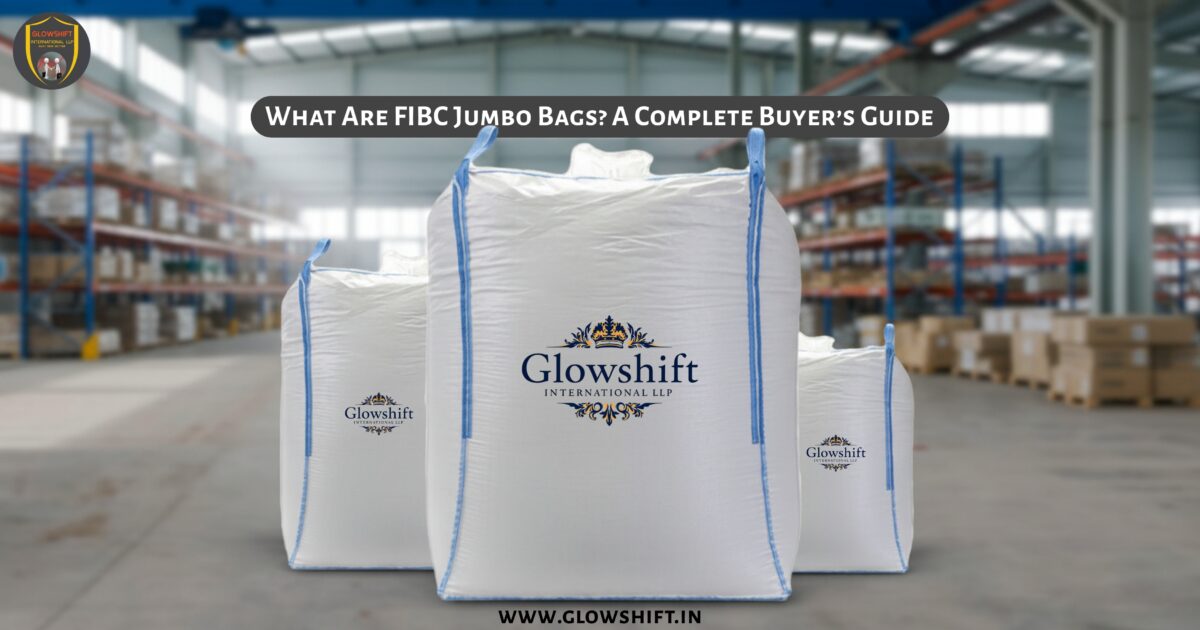
FIBC Jumbo Bags, or Flexible Intermediate Bulk Containers, are great for packaging and moving bulk materials. They are safe, efficient, and cost-effective. Industries such as agriculture, chemicals, construction, and food processing widely use them.
This guide will help you learn about FIBC bags. It covers the different types of FIBC bags and how they are made. You will also find tips on choosing the right one for your needs.
Understanding FIBC Jumbo Bags
FIBC Jumbo Bags are large, flexible containers made from woven polypropylene fabric. Designers create them to store and transport dry, flowable products like sand, cement, grains, fertilizers, or plastic granules.
The term “Flexible Intermediate Bulk Container” explains their nature well:
- Flexible – because the bag adjusts to its contents.
- Intermediate – because it holds intermediate quantities (usually between 500 kg and 2000 kg).
- Bulk Container – because it’s used for bulk material handling.
Their strong woven structure makes them reusable and resistant to tearing, ensuring maximum safety during transport and storage.
Why Businesses Prefer FIBC Bags
FIBC bags have become an essential part of modern industrial packaging due to their many advantages:
- High Strength and Durability – Made from tough PP woven fabric, these bags can carry heavy materials without damage.
- Space Efficiency – Their flexible shape and stackable design save storage space.
- Cost-Effective – Compared to rigid containers, they are affordable and reusable.
- Environmental Benefits – Many FIBC Jumbo Bags are recyclable and reusable, making them a sustainable packaging option.
- Safe Handling – With lifting loops and discharge spouts, they make loading and unloading easy and safe.
Common Types of FIBC Bags
Depending on their design and usage, there are several types of FIBC bags available in the market. Each is made to serve a specific purpose:
1. U-Panel FIBC Bags
These bags are constructed using three panels of fabric, forming a U-shape that provides excellent strength and durability. They are suitable for carrying heavy products such as sand, fertilizer, or minerals.
2. Four-Panel FIBC Bags
Made from four separate panels stitched together, these bags maintain a square shape when filled. They are preferred when stackability and shape retention are important.
3. Circular (Tubular) FIBC Bags
Produced using circular woven fabric, these bags have no side seams—offering extra strength and less risk of leakage. They are ideal for fine or powdery materials.
4. Baffle FIBC Bags
Also known as Q-bags, they have baffles (internal panels) sewn inside to maintain shape and stability. They are perfect for maximizing space during container shipments.
5. Food-Grade FIBC Bags
These are manufactured in hygienic, contamination-free environments and used for storing food products, sugar, flour, or pharmaceutical materials.
The FIBC Manufacturing Process
The FIBC manufacturing process involves several steps to ensure strength, safety, and reliability:
- Extrusion: Polypropylene granules are melted and extruded into tapes.
- Weaving: These tapes are woven into fabric rolls, forming the base of the jumbo bag.
- Cutting: The fabric is cut into specific sizes depending on the bag design.
- Printing: Company branding, handling instructions, and safety details are printed.
- Sewing: Panels, loops, and spouts are stitched together to create the final bag.
- Testing: We test every FIBC bag for weight, load capacity, and safety standards.
Manufacturers like Glow Shift International Pvt. Ltd. check each step carefully. They follow strict quality controls to meet global packaging standards.
Applications of FIBC Jumbo Bags
- Agriculture: For packaging grains, seeds, and fertilizers.
- Construction: For transporting cement, sand, and aggregates.
- Chemicals: For powders, granules, and industrial chemicals.
- Food Industry: For food-grade materials like sugar, salt, and flour.
- Recycling: For waste management and transportation of scrap materials.
Advantages of Using FIBC Bags
Here’s why they stand out:
1. Exceptional Strength and Durability
Made from high-quality woven polypropylene fabric, FIBC bags can carry heavy loads ranging from 500 kg to 2000 kg or more. Their construction ensures superior resistance to tears and punctures, even during rough handling or long-distance transport.
2. Cost-Effective Packaging Solution
Compared to rigid containers or drums, FIBC Bags are lightweight, reusable, and take up less space. This significantly reduces transportation and storage costs, giving businesses an economical edge.
3. Space Efficiency
Their flexible body allows for efficient stacking and better space utilization in warehouses and shipping containers. Especially baffle and U-panel bags maintain a square shape, maximizing storage capacity.
4. Safe and Easy Handling
These bags have strong lifting loops, filling spouts, and discharge valves. They make loading and unloading easier with forklifts or cranes. This reduces labor and lowers the risk of accidents during handling.
5. Customization for Every Industry
FIBC Jumbo Bags can be made to fit your needs. They come in food-grade and chemical-resistant options. You can customize their size, fabric weight, loop design, and discharge style. This makes them suitable for every industry, including agriculture, construction, and pharmaceuticals.
6. Global Export Compatibility
With standard designs that meet international packaging and shipping requirements, Flexible Intermediate Bulk Containers are widely accepted worldwide. Exporters prefer them for their ability to reduce shipping costs while maintaining product safety.
About Glow Shift International Pvt. Ltd.
Glow Shift International Pvt. Ltd. is a leading manufacturer and exporter of FIBC Jumbo Bags based in India. The company is dedicated to innovation, quality, and sustainability. We offer a variety of Flexible Intermediate Bulk Containers. These containers are made for industries like agriculture, construction, and chemicals.
Beyond FIBCs, Glow Shift also manufactures and exports PP woven bags, container liners, tarpaulins, and other industrial packaging solutions. Each product is crafted under strict quality standards to meet the needs of global clients.
Glow Shift International Pvt. Ltd. combines advanced technology with skilled craftsmanship. This creates packaging solutions that are safe, strong, and eco-friendly. As a result, we are a trusted name in the global packaging industry.
Reference:
Flexible intermediate bulk container by Wikipedia[1].
FIBC stands for Flexible Intermediate Bulk Container. These are large, flexible bags made from woven polypropylene fabric. They are designed to store and transport bulk materials like sand, grains, fertilizers, or chemicals.
The most common types of FIBC bags include U-Panel Bags, Four-Panel Bags, Circular (Tubular) Bags, and Baffle Bags. Some manufacturers also provide Ventilated FIBCs, Conductive Bags (Type C), Antistatic Bags (Type D), and Food Grade FIBCs. This depends on the needs of the application.
Yes. Depending on their design and usage, FIBC Bags can be reused multiple times. They are also 100% recyclable, making them an environmentally friendly option for bulk packaging and export shipping.
FIBC bags are commonly used in many areas. They are used in agriculture for grains, seeds, and fertilizers.
They are also used in construction for cement, sand, and gravel. Other uses include chemicals, food processing, pharmaceuticals, and mining. Their durability and ease of handling make them popular.
FIBC bags typically have a Safe Working Load (SWL) ranging from 500 kg to 2000 kg, depending on the bag design and material type. Custom sizes are also available based on customer requirements.